
Table of Contents
- Why Custom Homes Need a Deliberate Indoor Air Quality Strategy
- Mechanical vs. Natural Ventilation: Choosing the Right Air Exchange Rate
- Energy Recovery Ventilators (ERV) Benefits for Airtight Custom Homes
- Low-VOC Building Materials: Cutting Off-Gassing at the Source
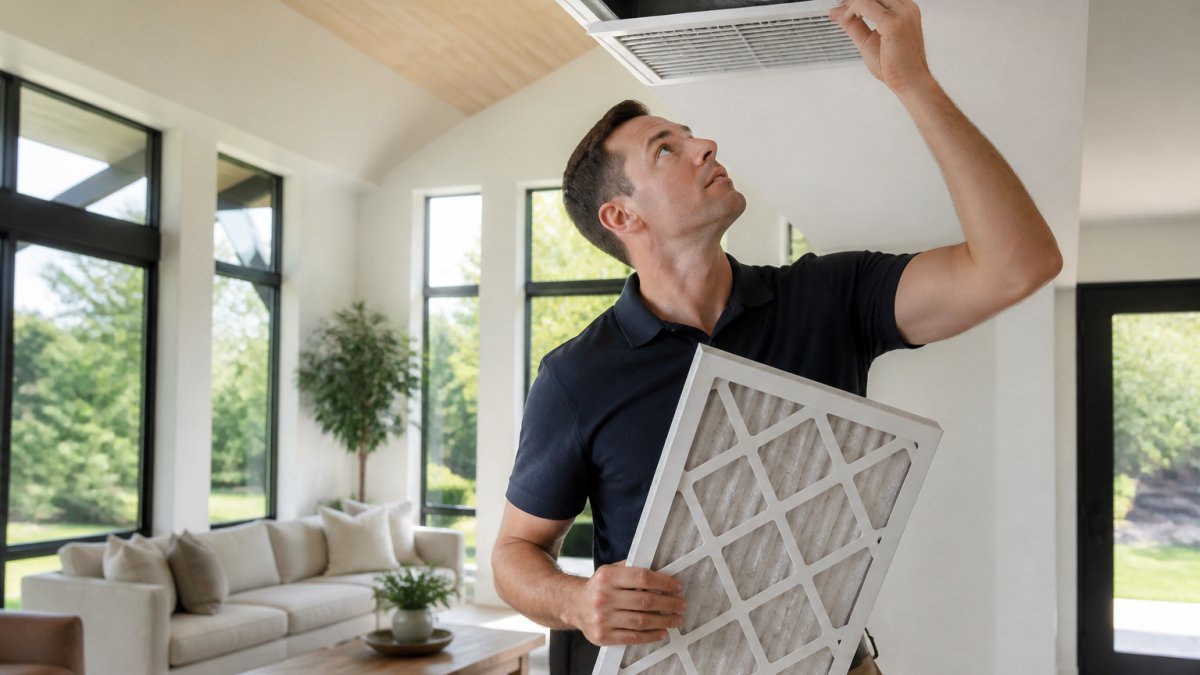
- MERV 13 vs HEPA Filtration: Matching Filters to Your HVAC Design
- Humidity Control, Mold Prevention, and the Building Envelope
- Smart Home Integration and Post-Construction IAQ Testing
- Conclusion: Building Indoor Air Quality Into Every Phase
- Frequently Asked Questions
Last Updated: October 4, 2026
Why Custom Homes Need a Deliberate Indoor Air Quality Strategy
Improving indoor air quality in custom homes is no longer optional. It is a design decision you make once and live with for decades. At SC Design, we help architects and builders treat air as a building system, not an afterthought.
Here is the core problem. Modern custom homes are built tighter than ever. That is good for energy bills. It is bad for the air you breathe. Without a plan, pollutants get trapped inside.
Indoor air quality is the measure of how clean and healthy the air inside a building is for the people who live there. It covers gases, particles, moisture, and airflow.
A common mistake is assuming a good HVAC system solves everything. It does not. Air quality depends on ventilation, filtration, materials, and moisture control working together.
This guide walks through the seven decisions that actually move the needle. We will cover ventilation, filtration, materials, and testing.
A custom home’s airtight envelope is only an asset if you pair it with deliberate fresh air intake. Tight construction without ventilation traps pollutants.
Mechanical vs. Natural Ventilation: Choosing the Right Air Exchange Rate
Mechanical ventilation uses fans and ductwork to move air on purpose. Natural ventilation relies on windows, leaks, and weather. Custom homes need mechanical systems as the baseline.
The air exchange rate measures how often a home’s full air volume is replaced in an hour, expressed as air changes per hour (ACH). Too low, and pollutants build up. Too high, and you waste energy. A common target for a tight custom home is roughly 0.35 ACH of continuous whole-house ventilation, with the ability to boost to 3-5 ACH during cooking, bathing, or a flush-out. Those numbers come from ASHRAE Standard 62.2, the residential ventilation standard most code officials reference.
There are three mechanical strategies, and they are not interchangeable:
- Exhaust-only. Bath and kitchen fans pull stale air out. Makeup air leaks in through the envelope. Cheap, but it depressurizes the house and pulls in whatever is in the wall cavity or crawlspace.
- Supply-only. A fan pushes filtered outdoor air in. Pressurizes the house, which pushes moist indoor air into the envelope in cold climates.
- Balanced. Separate supply and exhaust airstreams move matched volumes. No pressure imbalance, and incoming air can be filtered and tempered. This is the standard for airtight custom homes.
Natural ventilation still has a role. Cross-ventilation through well-placed windows works well in mild seasons. But you cannot depend on open windows year-round, and in many parts of the country the outdoor air itself carries pollen, wildfire smoke, or ozone on the days you would most want to open up.
So the smart approach is a hybrid:
- Balanced mechanical ventilation runs continuously as the foundation
- Natural ventilation supplements it in good weather, ideally with a sensor that closes intake when outdoor particulate matter spikes
- Controls let the system adjust to occupancy and outdoor conditions
How Tight Construction Changes the Ventilation Equation
Tight construction seals the building envelope against air leakage. That is a win for energy performance. It also means fresh air no longer sneaks in through gaps.
Older homes leaked enough to dilute indoor pollutants by accident. A 1970s house might see 1.0 to 1.5 ACH of uncontrolled infiltration. A modern custom home built to a tight envelope can drop below 0.2 ACH. That is a five- to seven-fold reduction in accidental fresh air, which is exactly why you must design ventilation in from day one.
The fix is a balanced system. It brings in fresh air and exhausts stale air at matched rates, so the house stays at neutral pressure. That matters because a depressurized house pulls soil gas, insulation fibers, and attic air into the living space, and a pressurized house pushes moisture into wall assemblies where it can condense.
Sizing is not guesswork. ASHRAE 62.2 sets the whole-house rate from the number of bedrooms and the conditioned floor area. A 3,000-square-foot, four-bedroom home typically lands in the 60-90 CFM range for continuous ventilation. Local exhaust, bath fans and kitchen hoods, is sized separately and must vent directly outdoors, never into an attic or crawlspace.
Energy Recovery Ventilators (ERV) Benefits for Airtight Custom Homes
An energy recovery ventilator (ERV) brings in fresh outdoor air while recovering heat and moisture from the air it exhausts. For airtight custom homes, an ERV is often the single most important mechanical decision.
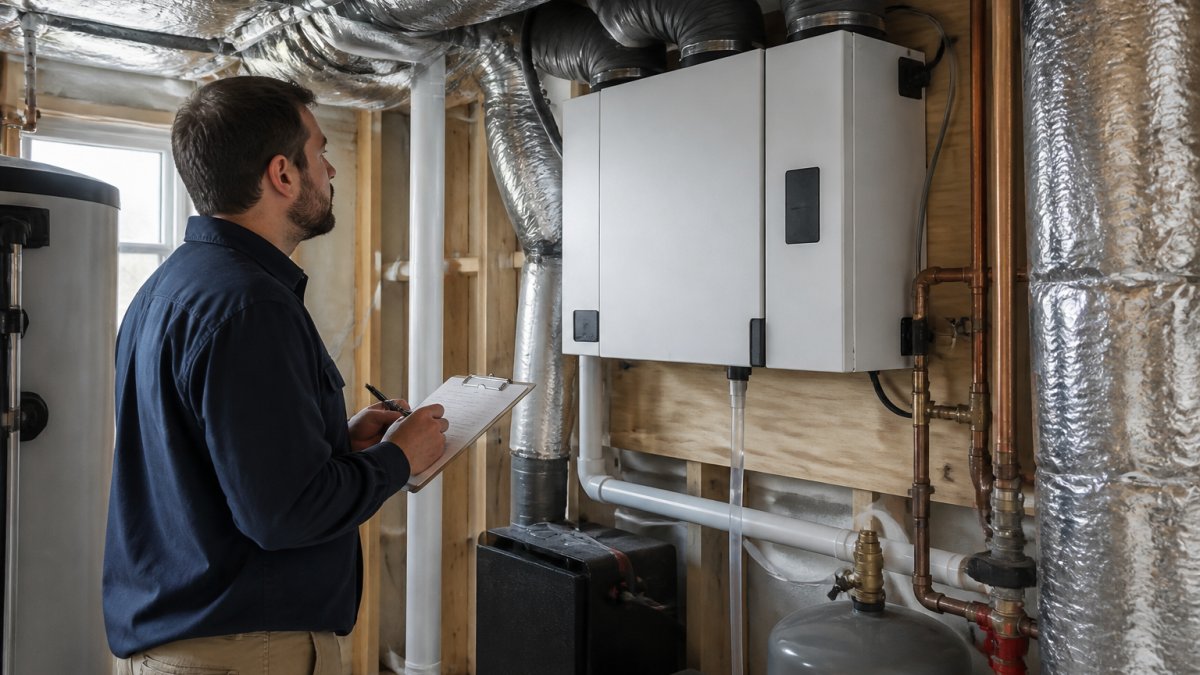
The benefits stack up quickly:
- Fresh air intake without throwing away conditioned air
- Moisture balance that helps control indoor humidity
- Lower heating and cooling loads than a simple exhaust fan
- Better filtration because incoming air passes through a filter
A heat recovery ventilator (HRV) does a similar job but does not manage moisture. In humid climates, an ERV usually fits better. In dry, cold climates, an HRV can be the right call.
What most guides miss is sizing. An oversized ERV wastes energy. An undersized one cannot keep up. Match the unit to the home’s volume and occupancy.
Low-VOC Building Materials: Cutting Off-Gassing at the Source
Low-VOC building materials are products that release few volatile organic compounds into the air. Volatile organic compounds (VOCs) are chemicals that evaporate from paints, adhesives, carpets, and cabinets. Off-gassing is the slow release of those chemicals over time.
You cannot ventilate your way out of a material problem. The better move is to stop VOCs at the source during design.
Where VOCs hide in a custom home:
- Paints, stains, and finishes
- Adhesives and sealants
- Carpet and padding
- Composite wood and cabinets
- Some insulation products
Specify low-VOC or no-VOC options for each. Ask suppliers for documentation. Then plan a flush-out before move-in.
This is a design-phase decision. Once cabinets are installed, your options shrink fast.
MERV 13 vs HEPA Filtration: Matching Filters to Your HVAC Design
The MERV rating (Minimum Efficiency Reporting Value) tells you how well a filter captures particles in three size bands, from 0.3 to 10 microns. Higher numbers catch smaller particles. HEPA filtration captures the smallest particles of all, by definition, 99.97% of particles at 0.3 microns (the EPA).
For most custom homes, MERV 13 is the practical sweet spot.
HEPA filters capture even more. But they create high pressure drop, often 0.7 to 1.0 inches of water column at rated airflow, versus 0.2 to 0.3 for a MERV 13.
So match the filter to the system:
| Filter Type | Particle Capture | Airflow Impact | Best For |
|---|---|---|---|
| MERV 8 | Moderate (captures >3 micron) | Low | Basic dust control |
| MERV 13 | High (captures 0.3-1.0 micron) | Moderate | Most custom homes |
| HEPA | Very high (99.97% at 0.3 micron) | High | Standalone purifiers or dedicated systems |
A common mistake is dropping a HEPA filter into a system not built for it. You get poor airflow and a strained blower. If you want HEPA-level cleaning, use a standalone air purification system instead.
Pet dander, mold spores, and smoke particles all fall into this range. Filtration is your second line of defense after ventilation, it cleans the air you recirculate, but it does not replace the fresh air a balanced system brings in.
Change MERV 13 filters every 60-90 days in a home with pets or during wildfire season. A loaded filter raises pressure drop and can cut airflow just as much as an oversized HEPA.
One more design decision: where the filter sits. A filter at the return grille protects the blower and coil but is harder to change. A filter at the air handler is easier to service but lets the return duct get dirty. Many custom homes use a media cabinet at the air handler with a MERV 13 media filter, and reserve HEPA for a dedicated bypass or standalone unit in the primary bedroom.
Humidity Control, Mold Prevention, and the Building Envelope
The building envelope is the shell that separates indoor from outdoor space: walls, roof, foundation, and windows. It controls heat, air, and moisture movement.
Relative humidity should stay in a comfortable middle range. Too high, and mold spores thrive. Too low, and you get dry air and static.
Mold needs moisture. Stop the moisture, and you stop the mold. Three moves do most of the work:
- Seal the envelope to prevent air leakage and condensation
- Vent bathrooms, kitchens, and laundry directly outside
- Use an ERV or dehumidifier to manage indoor humidity
A wet building envelope causes problems you cannot see. Water trapped in a wall feeds mold for years. By the time you smell it, the damage is done.
Skipping direct exhaust for bathrooms and kitchens pushes moisture into the envelope. That trapped moisture feeds mold and rots framing, and repairs mean opening finished walls.
Smart Home Integration and Post-Construction IAQ Testing
Smart home integration lets your ventilation and filtration respond to real conditions. Sensors track carbon dioxide levels, particulate matter, and humidity. The system adjusts airflow on its own.
This is where custom homes pull ahead of stock builds. You can tie the ERV, filters, and monitors into one control system.
Post-construction IAQ testing verifies that the home performs as designed. Test before the owners move in.
What to test:
- Air exchange rate under normal operation
- Filter performance and pressure drop
- Humidity levels across seasons
- VOC and formaldehyde levels after flush-out
Testing closes the loop. It proves the design works and gives the owner a baseline.
At SC Design, we build this verification into every engagement. It is how we confirm that our mechanical design delivers the healthy air we promised.
Conclusion: Building Indoor Air Quality Into Every Phase
Indoor air quality is a design problem, not a product you bolt on at the end. Every choice, from the building envelope to the filter, shapes the air your clients breathe.
SC Design helps architects, builders, and developers get this right from the start. Our team brings Zero Energy Design expertise, mechanical design experience, and a focus on healthier indoor air. We have extensive experience in diverse construction sectors since 1976.
Contact us to plan ventilation, filtration, and materials that work together for a genuinely healthy custom home.
Frequently Asked Questions
What are the primary signs of poor indoor air quality in new custom homes?
New custom homes often show poor indoor air quality through persistent musty odors, condensation on windows, frequent headaches or allergy symptoms among occupants, and visible mold near windows or bathrooms. Because tight construction limits natural air leakage, pollutants from off-gassing cabinets, paints, and adhesives can accumulate. A carbon dioxide monitor reading above 1,000 ppm during normal occupancy is a reliable indicator that fresh air intake is insufficient and ventilation needs adjustment.
How do energy recovery ventilators (ERV) benefits apply to airtight custom homes?
Energy recovery ventilators (ERV) benefits are most pronounced in airtight custom homes because they supply filtered fresh air while recovering heat and moisture from exhaust air. This keeps indoor relative humidity stable, reduces the load on your HVAC system, and dilutes volatile organic compounds and carbon dioxide without the energy penalty of opening windows. For homes built to tight construction standards, an ERV is often the only way to hit target air exchange rates without sacrificing efficiency.
Should I choose MERV 13 or HEPA filtration for my custom home HVAC system?
MERV 13 filtration captures the majority of particulate matter, pet dander, and mold spores while maintaining airflow that most residential HVAC systems can handle. HEPA filtration removes over 99.97% of particles at 0.3 microns but creates significant pressure drop, so it usually requires a dedicated bypass system or standalone air purification unit rather than a standard return-air filter slot. Many custom homes pair MERV 13 in the main HVAC with a standalone HEPA air purification system in bedrooms for the best balance of efficiency and air quality.
How does mechanical ventilation impact indoor air quality in airtight custom homes?
Mechanical ventilation continuously replaces stale indoor air with filtered outdoor air, which controls carbon dioxide levels, dilutes volatile organic compounds, and manages relative humidity. In airtight custom homes, mechanical ventilation is not optional; without it, indoor pollutants concentrate because the building envelope does not allow enough natural air leakage. A balanced system with an energy recovery ventilator or heat recovery ventilator delivers consistent air exchange rates regardless of weather, unlike opening windows or relying on cross-ventilation.