
Table of Contents
- Why Indoor Air Quality Deserves a Place in Every Build Plan
- How to Reduce Indoor Air Pollutants With Source Control
- Mechanical Ventilation Systems for Homes: Getting the Air Exchange Rate Right
- The Impact of Humidity Control on Air Quality
- Low-VOC Building Materials That Hold Up Over Time
- Filtration, Monitoring, and Smart Home Integration
- Conclusion
- Frequently Asked Questions
Last Updated: September 13, 2026
Why Indoor Air Quality Deserves a Place in Every Build Plan
Indoor air quality is the measure of pollutants, humidity, and ventilation inside a building, and it shapes how every occupant sleeps, breathes, and recovers. The EPA indoor air quality guidance makes the case plainly: indoor pollutant levels can run several times higher than outdoor levels because homes trap what they generate. That single fact should change how you spec a house. Below, we break down the strategies for better indoor air quality that hold up across climate zones and budget levels.
How to Reduce Indoor Air Pollutants With Source Control
Source control is the cheapest air quality strategy available, because the cleanest air is the air you never contaminated. Every dollar spent removing a pollutant at its origin saves several spent filtering it later. The EPA’s source control overview frames it as the first line of defense for exactly this reason.
Combustion Appliances and Cooking Exhaust
Gas ranges, fireplaces, and wood stoves release nitrogen dioxide, carbon monoxide, and fine particulate matter directly into living space. A common mistake is running a range hood that vents nowhere, recirculating grease and combustion byproducts straight back into the kitchen. Confirm your hood exhausts outdoors, and run it every time the burners are on.
Managing Off-Gassing and Synthetic Fragrances
New cabinets, adhesives, carpets, and paint release volatile organic compounds for weeks after installation. Air fresheners and scented candles add synthetic fragrances on top of that load. Specify low-emitting products, ventilate during and after installation, and skip the plug-ins entirely.
Mechanical Ventilation Systems for Homes: Getting the Air Exchange Rate Right
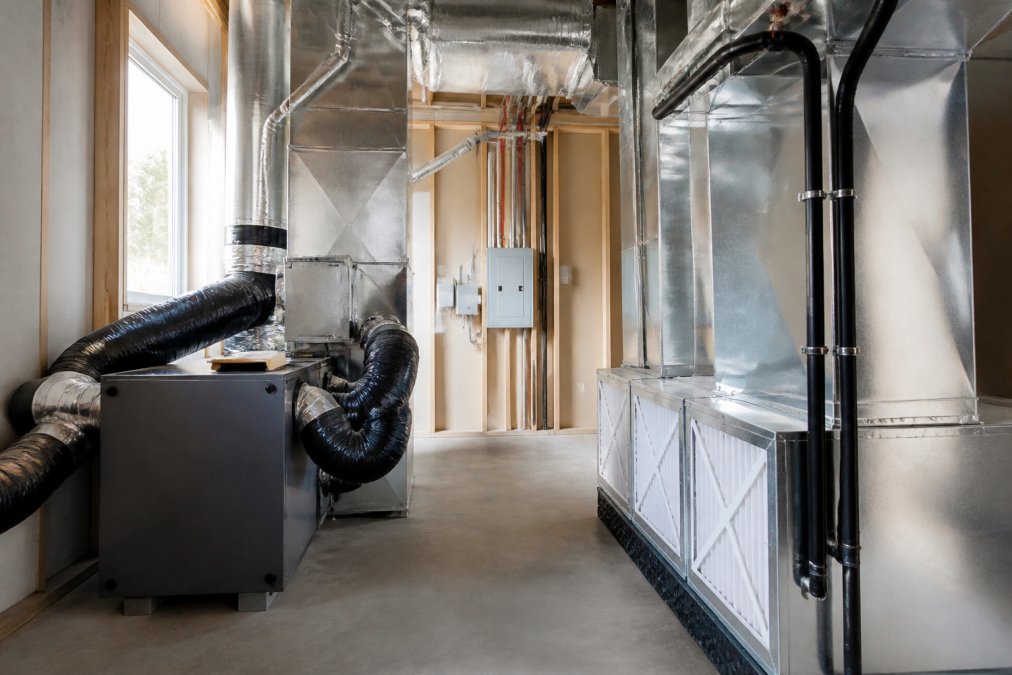
Mechanical ventilation systems for homes bring controlled fresh air in and stale air out, and the air exchange rate determines whether that happens well or barely at all. A tight, well-built house without mechanical ventilation simply holds its pollutants longer. Balanced systems, where supply and exhaust move similar volumes, keep pressure neutral and stop outdoor air from being pulled through wall cavities.
Balancing Fresh Air Intake With Energy Recovery
Heat recovery ventilators transfer heat from outgoing air to incoming air, so you get fresh air without throwing away conditioned energy. The trade-off is maintenance: filters and cores need regular cleaning, and a neglected unit quietly underperforms. Commission the system with a measured balance report, not a guess.
The Impact of Humidity Control on Air Quality
The impact of humidity control on air quality shows up in the biology it prevents. Mold spores, dust mites, and microbial growth all need elevated moisture to thrive, and keeping relative humidity between 30 and 50 percent starves them. Above 60 percent, dust mites reproduce rapidly and mold colonies establish on drywall, wood framing, and grout. Below 30 percent, you trade one problem for another: dry air irritates airways, cracks wood flooring and cabinetry, and increases static that pulls dust into the air.
Where Moisture Actually Comes From
Most homeowners underestimate the indoor moisture load. A family of four generates roughly two to four gallons of water vapor per day through cooking, showering, laundry, and breathing. Add a damp basement, an unvented dryer, or a slab-on-grade floor, and the load climbs fast. The first move is always source reduction: vent dryers outdoors, run bathroom exhaust fans for 20 minutes after showers, cover pots while cooking, and fix plumbing leaks before they feed a mold colony.
Dehumidifiers: Portable vs. Whole-Home
Portable dehumidifiers work well for a single damp room, a basement, or a crawl space, and most consumer units are rated by pints per day removed at a specific temperature and humidity. Capacity ratings drop sharply as temperatures fall, so a unit rated for 50 pints at 80°F may pull far less in a 60°F basement. Whole-home dehumidifiers integrated with the HVAC system handle the entire envelope and are the better choice in humid climates or tightly built homes where the air conditioner alone cannot keep up. A common pattern is a house that feels clammy even with the AC running because oversized cooling short-cycles and never removes enough moisture.
Humidification in Dry Climates and Winter
In cold, dry climates, winter indoor humidity can fall into the teens. Whole-home humidifiers tied to the furnace or air handler maintain a stable setpoint, while portable units handle single rooms. The trade-off is maintenance: humidifier pads, canisters, and reservoirs breed bacteria and mold if neglected, so clean or replace them on the manufacturer’s schedule.
Monitoring and Warning Signs
A cheap hygrometer in each zone tells you more than a single reading near the thermostat. Watch for condensation on window glass in winter, musty odors in closets and basements, peeling paint, and warped wood. Any of these signals that moisture is winning. Target 30-50 percent year-round, and adjust with the seasons rather than chasing a single number.
Low-VOC Building Materials That Hold Up Over Time
Low-VOC building materials are finishes, adhesives, sealants, and composite wood products engineered to release fewer volatile organic compounds as they cure. The label matters less than the standard behind it, and the standards are specific enough to check.
The Certifications That Actually Mean Something
- GREENGUARD Gold (UL Environment) sets some of the strictest emissions limits for total VOCs and individual chemicals like formaldehyde, and it accounts for sensitive populations such as children and the elderly.
- Green Seal covers paints, coatings, adhesives, and cleaning products with limits on VOCs and other compounds.
- Cradle to Cradle Certified evaluates material health across the product lifecycle, not just off-gassing.
- FloorScore applies specifically to hard surface flooring and the adhesives used with it.
- CARB Phase 2 and TSCA Title VI are the federal formaldehyde emissions standards for composite wood products sold in the United States, and compliant panels are required regardless of any green marketing claim.
Ask suppliers for emissions documentation rather than taking a green-sounding name at face value. A product can be ‘low-VOC’ by one definition and still emit formaldehyde or other irritants above the thresholds that matter.
Where VOCs Actually Hide
Off-gassing is rarely limited to paint. The biggest contributors in a new or renovated home are typically:
- Composite wood, plywood, particleboard, MDF, and the adhesives binding them, which can emit formaldehyde for months.
- Adhesives and sealants, construction adhesive, caulk, and flooring mastic.
- Paints and finishes, including some ‘zero-VOC’ paints whose colorants add VOCs back in.
- Carpet and padding, new carpet is a well-known source of 4-PC and other emissions.
- Cabinetry and millwork, often the single largest composite wood load in a kitchen or bath.
A Practical Off-Gassing Protocol
New materials release the bulk of their VOCs in the first days to weeks, then taper over months. A workable sequence:
- Specify certified low-emitting products before construction starts, when substitutions are still cheap.
- Ventilate aggressively during and immediately after installation, open windows, run exhaust fans, and use temporary box fans to push air out.
- Bake out the house if the schedule allows: raise indoor temperature for a few days with ventilation running to accelerate off-gassing, then flush the air.
- Keep mechanical ventilation running continuously for the first several weeks of occupancy.
- Re-test with a monitor or a professional assessment if occupants report headaches, eye irritation, or a persistent chemical odor.
The payoff compounds: materials that off-gas less on day one also tend to age with fewer odor complaints and healthier indoor air for the life of the building.
EPA’s indoor air quality guidance on volatile organic compounds
Filtration, Monitoring, and Smart Home Integration
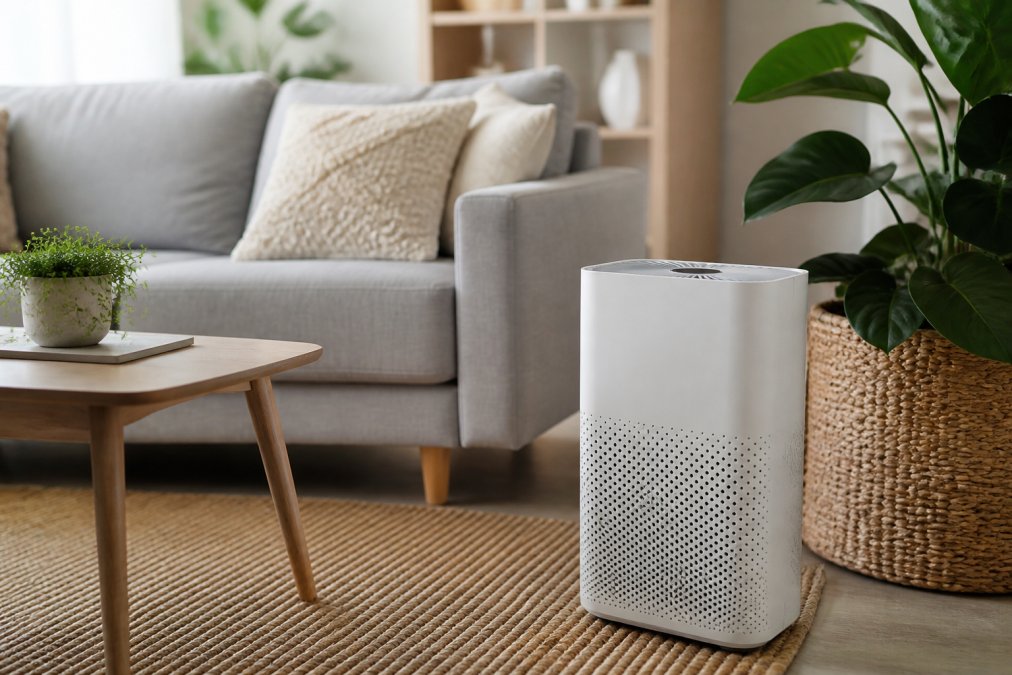
Filtration, monitoring, and smart home integration turn air quality from a guess into a managed system. A HEPA filter captures fine particulate matter that standard filters pass through, and air quality index readings from a monitor tell you when to run it harder. Smart integration takes that further: connected monitors trigger purifiers, exhaust fans, and fresh air intake automatically when particulate matter or carbon monoxide spikes, and log trends you can review later. Budget-friendly DIY air filtration works for renters and retrofits: a box fan with a high-efficiency filter taped to the intake moves meaningful air for a fraction of a purifier’s cost, though it is louder and less elegant. Wildfire smoke and seasonal external factors are where monitoring earns its keep, since outdoor conditions can change overnight and a sealed house with filtered recirculation is your best defense. If you want this engineered into the design from day one, ENERGY STAR’s indoor air quality resources are a solid starting reference.
|
Strategy |
Effort |
Ongoing Cost |
Best For |
|---|---|---|---|
|
Source control |
Low |
Lowest |
Every project |
|
Mechanical ventilation |
High |
Moderate |
Tight, new construction |
|
Humidity control |
Moderate |
Moderate |
Basements, humid climates |
|
Filtration and monitoring |
Low to moderate |
Moderate |
Smoke events, allergies |
Conclusion
Getting air quality right takes more than a purifier in the corner; it takes source control, balanced ventilation, humidity management, and monitoring working together from the design phase. SC Design has specialized in Zero Energy Design and Built Green™ consulting, and our mechanical design work is built to deliver exactly these outcomes: healthier indoor air, greater energy efficiency, and buildings that hold up over decades. If you are planning a custom home or a large-scale development, contact us and let our team engineer the air your occupants breathe.
Frequently Asked Questions
What are the most effective strategies for better indoor air quality?
The EPA and indoor air researchers point to three pillars: source control, ventilation, and filtration. In practice, that means sealing or removing pollution sources first, then bringing in measured amounts of fresh air through mechanical ventilation, then filtering what remains. Humidity control and regular HVAC maintenance support all three. No single device fixes indoor air quality; the strongest results come from layering these strategies during design rather than adding gadgets after move-in.
How does mechanical ventilation improve indoor air quality?
Mechanical ventilation systems for homes replace stale indoor air with filtered outdoor air at a controlled air exchange rate, rather than relying on random leaks in the building envelope. Balanced systems with heat or energy recovery bring in fresh air while recovering heat from the exhaust stream, so you get dilution of volatile organic compounds, carbon monoxide, and particulate matter without the energy penalty of a leaky house. Exhaust fans in kitchens and baths handle localized spikes.
Are air purifiers necessary for better indoor air quality?
Air purifiers help, but they work best as a supplement, not a substitute. A HEPA filter captures fine particulate matter, and a carbon stage can reduce some volatile organic compounds and odors. However, no portable unit can remove carbon monoxide or radon, and none replaces source control or ventilation. Prioritize ventilation and humidity control first, then add air purification systems sized to the room, especially during wildfire smoke events when outdoor air quality index readings spike.
What are the EPA guidelines for maintaining healthy indoor air?
The EPA’s indoor air guidance centers on three actions: control the source of pollutants, ventilate with clean outdoor air, and use air cleaning as a backup. It also recommends testing for radon, maintaining combustion appliances, keeping relative humidity between roughly 30 and 50 percent, and changing HVAC filters on schedule. These steps apply whether you are commissioning a new high-performance home or retrofitting an existing one.