
Last Updated: November 5, 2026
Quick Summary
hvac design is the practice of planning how a home is heated, cooled, ventilated, and dehumidified before equipment is ever selected, covering load calculations, duct layout, equipment sizing, and controls. Getting that planning right lowers energy bills, improves comfort and indoor air quality, and helps equipment last longer.
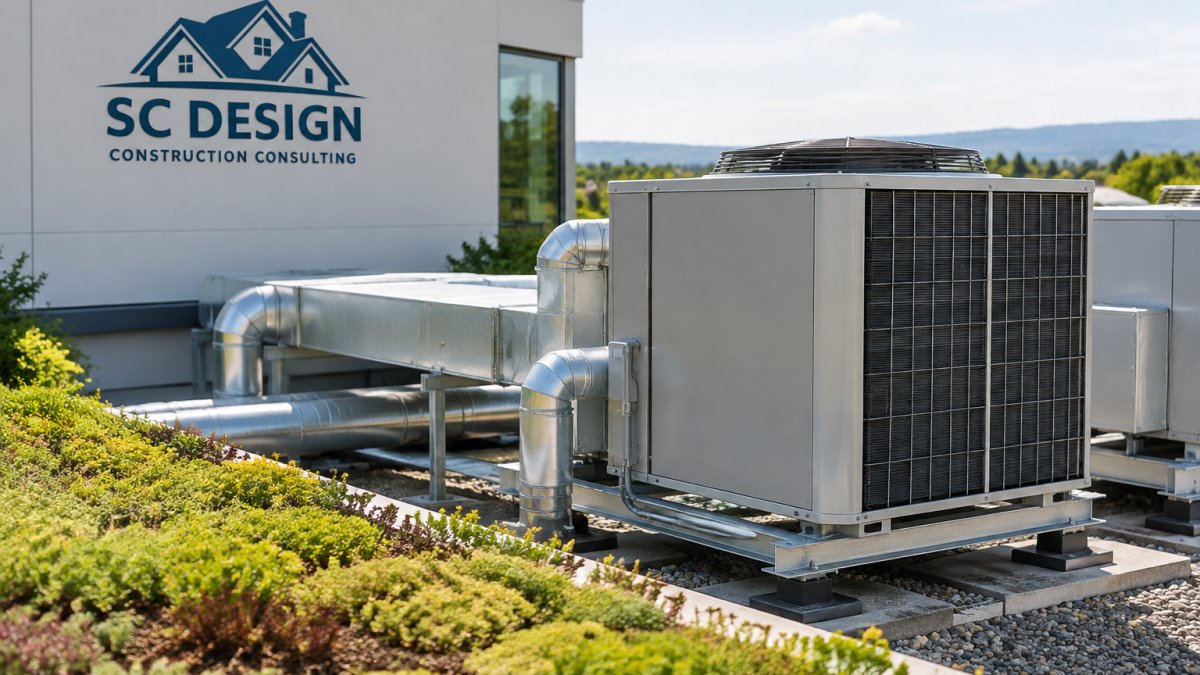
- Energy recovery equipment can cut energy use by 15% or more, according to the Department of Energy.
- Reduce the load first through orientation, shading, insulation, and air sealing before ordering equipment.
- A room-by-room load calculation, often called a Manual J, drives equipment size, duct size, and register placement.
- Oversized equipment short-cycles, leaving rooms uneven and clammy and wearing out compressors faster.
- A replacement cycle may run 12 to 20 years depending on equipment type, climate, and how hard it works.
Table of Contents
- Why HVAC Design Decides How Sustainable Your Home Really Is
- Benefit 1: Lower Energy Consumption and Smaller Utility Bills
- Benefit 2: Energy-Efficient HVAC Design That Pays You Back
- Benefit 3: A Right-Sized HVAC System Means Real Comfort
- Benefit 4: Home Energy Modeling Shows the Savings Before You Build
- Benefit 5: Better Indoor Air Quality and Ventilation
- Benefit 6: Fewer Emissions and a Smaller Footprint
- Benefit 7: Equipment That Lasts and Costs Less to Maintain
- Frequently Asked Questions
Why HVAC Design Decides How Sustainable Your Home Really Is
According to the Department of Energy, energy recovery equipment can cut energy use by 15% or more. That number matters because it comes from design choices, not from the equipment label. At SC Design, we’ve watched homeowners spend big on “green” appliances while the real savings sat untouched in the ductwork and load calculations.
Here’s the core idea: a sustainable home is not a collection of efficient products. It’s a system. And hvac design sits at the center of that system.
HVAC design is the practice of planning how a home is heated, cooled, ventilated, and dehumidified before equipment is ever selected. It covers load calculations, duct layout, equipment sizing, and controls.
Get that planning right and everything downstream gets easier. Skip it, and you inherit comfort problems, high bills, and equipment that wears out early.
Below, we’ll walk through seven benefits of hvac design for sustainability, in plain terms, with the trade-offs nobody mentions.
Benefit 1: Lower Energy Consumption and Smaller Utility Bills
HVAC typically accounts for the largest share of a home’s energy use. So the fastest path to lower bills runs through the system that runs most often.
Sustainable HVAC design starts with a load calculation, not a rule of thumb. That means measuring how much heat the house gains and loses, then sizing equipment to match. A peer-reviewed review of HVAC sustainability notes that improving ventilation components and control strategies is critical for both energy efficiency and indoor air quality.
In practice, this means:
- Right-sized equipment that runs longer, steadier cycles
- Sealed, well-planned duct runs with fewer leaks
- Zoning so you don’t condition rooms nobody uses
- Controls that adjust to occupancy and weather
For a step-by-step walkthrough of how this plays out in a real home, see our guide on HVAC design for energy efficient homes.
Benefit 2: Energy-Efficient HVAC Design That Pays You Back
Energy-efficient hvac design is not a luxury upgrade. It’s a cost-avoidance strategy that compounds over the life of the house. But the payback doesn’t come from buying the highest-rated box on the shelf. It comes from a sequence of decisions made before anyone orders equipment.
Here’s the order I use on every project, and the order I’d ask any homeowner to insist on:
- Reduce the load first. Orientation, window placement, shading, insulation levels, and air sealing all shrink the amount of heating and cooling the house needs. A smaller load means smaller equipment, smaller ducts, and lower bills for the life of the home. This is the cheapest efficiency you will ever buy.
- Calculate the load, don’t guess it. A room-by-room load calculation (often called a Manual J) tells you how much heat the house gains and loses on the design day. Everything downstream, equipment size, duct size, register placement, depends on this number.
- Select equipment for your climate, not for a brochure. A heat pump that performs beautifully in a mild coastal climate may struggle in a mountain winter or a desert summer if it isn’t matched to local design temperatures. Ask what the equipment’s rated capacity is at your design conditions, not at the mild test conditions on the label.
- Design the duct system to the equipment. Ducts that are too small, too long, or run through an unconditioned attic waste more energy than most people realize. Sealed, insulated, short duct runs inside the conditioned space are worth more than a higher-efficiency condenser.
- Add controls last. Smart thermostats and zoning are useful, but they can’t fix a system that was sized wrong or ducted badly. Controls tune a good design; they don’t rescue a bad one.
The Department of Energy points to energy recovery equipment delivering savings of 15% or more in the right applications. That’s a real number, but it assumes the rest of the system is designed to work with it.
Where heat pumps and electrification fit: in many homes, a well-designed heat pump system paired with a tight envelope can handle both heating and cooling and move the house off fossil fuels. In cold-climate locations, cold-climate-rated heat pumps with backup capacity are often used. In hot, dry climates, the priority shifts to right-sized cooling, good dehumidification, and shading that keeps the load down in the first place.
Watch out: a heat pump dropped into a leaky, poorly ducted house will disappoint the homeowner, and the equipment usually gets the blame. The design is what failed.
For a step-by-step walkthrough of how this plays out in a real home, see our guide on HVAC design for energy efficient homes.
Benefit 3: A Right-Sized HVAC System Means Real Comfort
A right-sized HVAC system is one matched to the home’s actual load, not guessed from square footage. That single decision drives comfort more than any thermostat brand.
Oversized equipment short-cycles. It blasts cold air, shuts off, and leaves rooms uneven and clammy. Undersized equipment runs constantly and never quite catches up.
What right-sizing delivers:
- Steady temperatures room to room
- Better humidity control, especially important in desert climates
- Quieter operation
- Less wear on the equipment
Comfort and efficiency are not competing goals here. They come from the same calculation.
Benefit 4: Home Energy Modeling Shows the Savings Before You Build
Home energy modeling is a computer simulation of how a house will perform before it’s built. It predicts energy use, peak demand, and comfort under real weather conditions.
This is where most guides go quiet. Modeling lets you test decisions while they’re still cheap to change. Swap the window spec, adjust the insulation, shift the orientation, and see the effect on paper.
The Choosing by Advantages case study on net-zero HVAC selection shows a structured way to weigh performance against cost when picking systems for net-zero buildings. That’s the same logic a homeowner can use.
For a deeper look at how this works, our team put together a guide on energy modeling services.
Benefit 5: Better Indoor Air Quality and Ventilation
Indoor air quality and ventilation are the benefits homeowners feel fastest. A tight, efficient house still needs controlled fresh air, and that’s a design decision.
Modern homes seal up well. That’s good for energy, but it traps moisture, cooking fumes, and other pollutants. A planned ventilation strategy fixes that without throwing away efficiency.
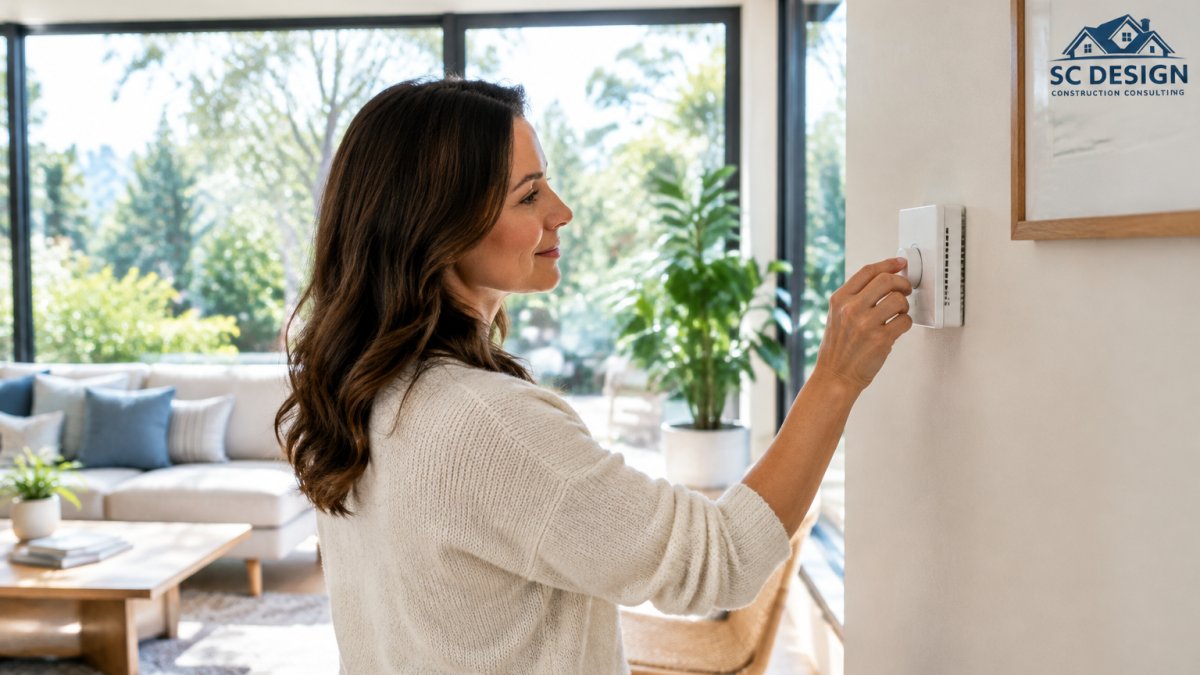
What good ventilation design includes:
- A dedicated fresh-air system, not just open windows
- Heat or energy recovery so you don’t lose conditioned air
- Balanced exhaust in kitchens and baths
- Filtration matched to the household’s needs
If air quality is a priority for your family, our article on strategies for better indoor air quality covers practical steps.
Benefit 6: Fewer Emissions and a Smaller Footprint
Greenhouse gas emissions from a home track its energy use almost directly. Cut the energy, and the environmental impact falls with it.
This is where sustainable HVAC design earns its keep. Electrification through heat pumps, paired with a well-sealed envelope, can move a house off fossil fuels entirely in many cases. Add renewable energy, such as solar, and the footprint shrinks further.
The trade-off? Heat pumps perform best when the envelope and ductwork are designed for them. Retrofit them into a leaky house and you’ll be disappointed.
For readers in hot, dry climates, our page on energy-efficient home design for the Arizona desert ties efficiency and footprint to the local conditions.
Benefit 7: Equipment That Lasts and Costs Less to Maintain
Maintenance costs are the quiet line item in every home budget. Right-sized, well-designed systems simply last longer, but the bigger story is total cost of ownership over the life of the house, and that’s where most guides stop short.
Think about an HVAC system the way you’d think about a roof. You’re not buying it for the first year. You’re buying it for a replacement cycle that may run 12 to 20 years depending on equipment type, climate, and how hard it works. A system that was oversized, ducted poorly, or installed with leaky connections will spend that whole cycle costing more in repairs, energy, and early replacement.
What actually lowers long-term costs:
- Equipment sized to the actual load. Oversized equipment short-cycles, which wears out compressors, blowers, and controls faster. A system matched to the load runs steadier and needs fewer repairs.
- Ductwork sealed and balanced at install. Leaky ducts in an unconditioned attic can lose a meaningful share of the air you paid to condition. Sealing and balancing at install is far cheaper than chasing comfort complaints later.
- Filtration that’s easy to reach and change. A filter tucked behind furniture or requiring a ladder gets changed less often, and restricted airflow stresses the equipment.
- Controls that flag problems early. Advanced control strategies are a key lever for long-term performance, and they catch small issues before they become expensive ones.
- A plan for refrigerant and replacement. Refrigerant rules and equipment efficiency standards change over time. Ask your installer what happens at replacement, and whether the system you’re buying uses a refrigerant that will still be serviceable down the road.
The PMC review of HVAC sustainability points to advanced control strategies as a key lever for long-term performance. Good controls catch small issues before they become expensive ones.
Where sustainable systems can go wrong, the part nobody puts in the brochure:
- Oversizing. The most common failure I see. It shows up as clammy rooms, uneven temperatures, and equipment that dies young.
- Poor controls setup. A smart thermostat left on factory defaults is just an expensive thermostat.
- Inadequate ventilation. A tight house without planned fresh air traps moisture and pollutants, and the air quality benefit disappears.
- Installation defects. A great design installed with leaky ducts and a sloppy charge won’t deliver the modeled savings.
- Maintenance constraints. A system the homeowner can’t reasonably maintain will not last as long as the spec sheet promises.
None of this means sustainable HVAC design is oversold. It means the benefits are real only when the design, the install, and the maintenance plan all line up. That’s the honest version of the payback story.
When you’re ready to talk through your project, you can contact our team.
Here are the design and install choices that actually lower long-term costs, and the common failures that undo them.
| What lowers long-term cost | Why it matters |
|---|---|
| Equipment sized to the actual load | Oversized equipment short-cycles and wears out faster |
| Ductwork sealed and balanced at install | Leaky ducts in an unconditioned attic lose conditioned air |
| Filtration easy to reach and change | Restricted airflow stresses the equipment |
| Controls that flag problems early | Catch small issues before they get expensive |
| A plan for refrigerant and replacement | Ask what happens at replacement |
| Replacement cycle may run 12 to 20 years | Depends on equipment type, climate, and how hard it works |
Frequently Asked Questions
What are the benefits of sustainable HVAC design?
The main benefits are lower energy use and utility bills, steadier room-to-room comfort, better indoor air, fewer greenhouse gas emissions, and equipment that lasts longer with less maintenance. The size of the savings depends on your climate, your building envelope, and how well the system is sized and controlled, so the design work comes first.
How does proper HVAC sizing improve comfort and efficiency?
A right-sized HVAC system is matched to your home’s actual heating and cooling load instead of a rule of thumb. When equipment is oversized, it short-cycles: it blasts on, cools the room fast, and shuts off before it has pulled much humidity out of the air. That leaves rooms feeling clammy and wears parts out faster. Correct sizing, based on load calculations, lets the system run longer, steadier cycles that even out temperatures and use less energy.
What is home energy modeling, and how can it help with home design?
Home energy modeling is a computer simulation of how your planned house will use energy, based on its size, orientation, insulation, windows, air sealing, and equipment. It lets you test choices on paper before anything is built, like comparing a heat pump to a furnace or checking whether extra attic insulation pays off.
Can HVAC design improve indoor air quality?
Yes. In practice, good ventilation design means bringing in measured amounts of fresh air, filtering it properly, and exhausting kitchens and baths rather than relying on leaks in the building shell. Energy recovery equipment lets you ventilate without throwing away all your heated or cooled air.
The hardest part of building a sustainable home isn’t picking equipment. It’s committing to design the system before the walls go up. That’s the work we do at SC Design: load calculations, energy modeling, ventilation planning, and right-sized equipment selection, all tied to how you actually live. If you want lower bills, better air, and equipment that lasts, start with the design. Get started with SC Design and build a home that performs the way it should.
