
Last Updated: November 4, 2026
Quick Summary
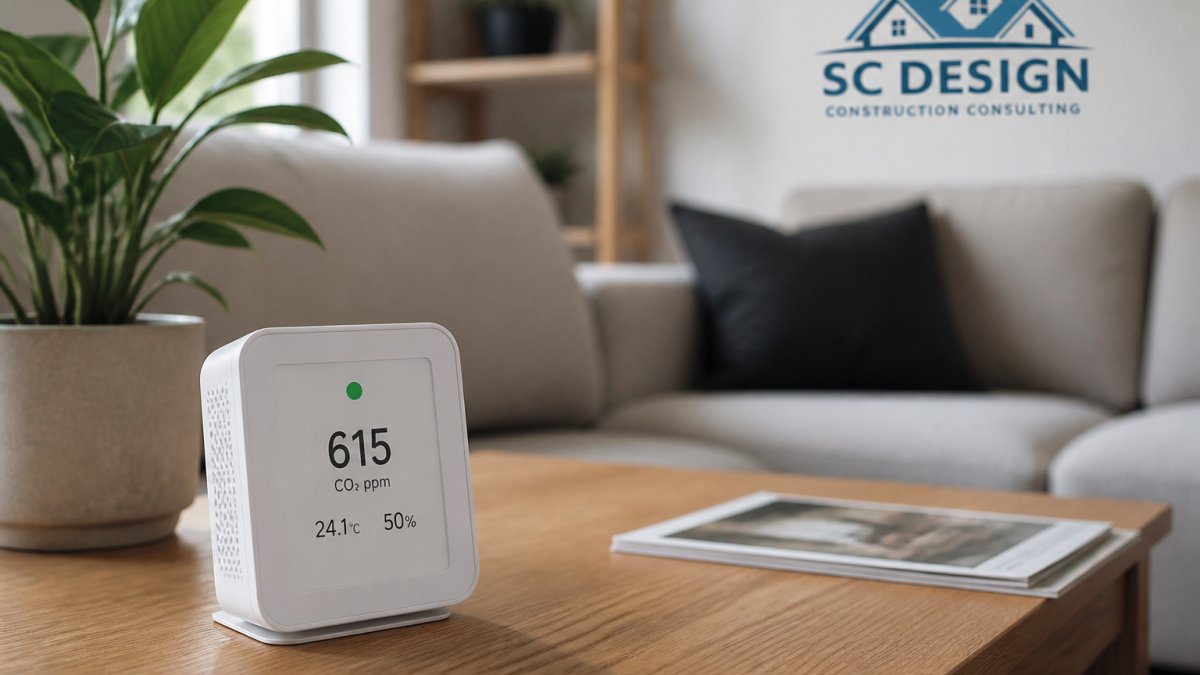
Indoor air quality monitors are worth it as trend tools, not lab instruments, because low-cost sensors drift and readings are relative. Plan on three devices for a typical house, and treat a monitor as a smoke detector for air, not a fix.
- Consumer monitors report readings on a screen or app, while professional systems use calibrated sensors and service contracts.
- The Aranet4 HOME is a battery-powered CO2 monitor built for carrying from room to room.
- The Airthings View Plus measures seven parameters, including radon, which you cannot smell.
- Place monitors at breathing height, away from windows, doors, and direct sun.
- Log two weeks of readings before changing anything, because one wet afternoon is weather.
Table of Contents
- What Indoor Air Quality Monitoring Systems Do in 2026
- The Best Indoor Air Quality Monitor Picks for 2026
- Air Quality Monitor Sensors and Accuracy: What to Expect
- The Best Indoor Air Quality Monitor for Mold and Hidden Problems
- How to Use an Indoor Air Quality Monitor Without Overreacting
- Smart Features, App Data, and What You Pay Over Time
- Designing a Home Where the Monitor Rarely Alarms
- Get a Free Consultation on Healthier Home Design
- Frequently Asked Questions
What Indoor Air Quality Monitoring Systems Do in 2026
A monitor tells you what is floating in your air, not what to do about it. The global market for indoor air quality monitoring systems was estimated at USD 9.45 billion in 2026, according to Precedence Research’s market estimate, which tells you how much attention these devices now get. If you are still choosing equipment, our guide to the best air filtration systems for new homes covers what to pair with a monitor.
Consumer Monitors vs. Professional Monitoring Systems
Consumer monitors are plug-in devices that report a handful of readings on a screen or app. Professional monitoring systems use calibrated sensors, fixed mounting points, and often a service contract. The gap is not the number on the display. It is what happens when that number is wrong. A 2026 systematic review by G. Silva and coauthors examined low-cost sensor accuracy and limitations for indoor pollutant monitoring, and the published review treats accuracy as an open question rather than a settled one. For a homeowner, that means a $200 monitor is a trend tool. It is not a lab instrument, and it should not be treated as one.
The Best Indoor Air Quality Monitor Picks for 2026
No single monitor wins for every home, and I would be suspicious of anyone who says otherwise. Consumer Reports tested monitors from AirGradient, Amazon, Ikea, Inkbird, IQAir, and Qingping in its 2026 monitor testing, and the spread in features is wide. Here is how I would sort the common picks for a typical house, plus the trade-offs the spec sheets bury.
| Monitor | What it measures | Listed price | Best for |
|---|---|---|---|
| Aranet4 HOME | CO2 | Not listed in the supplied results | Portable CO2 tracking room to room |
| IQAir AirVisual Pro | Multiple factors (confirm sensor list) | $330 | Countertop display plus outdoor comparison |
| Airthings View Plus | Seven parameters, including radon | Not listed in the supplied results | Broad coverage, radon included |
| Qingping Gen2 | Not specified in the supplied results | Not listed in the supplied results | Comparison shopping from a tested brand |
Aranet4 HOME
The Aranet4 HOME is a battery-powered indoor CO2 monitor built for carrying from room to room. That portability is the whole pitch. If your only question is whether a bedroom or office gets stuffy, a single-parameter CO2 device answers it cleanly. The supplied results do not verify measurements beyond CO2, so do not buy it expecting particulate matter or VOC readings.
Best for: homeowners who want a portable CO2 monitor.
Skip if: you need a full picture of airborne pollutants.
IQAir AirVisual Pro
At $330, the AirVisual Pro is the priciest pick here, and it earns part of that with a readable display and indoor-plus-outdoor monitoring. The supplied review highlights the display and multi-factor measurement. It does not specify which factors it measures, so confirm the sensor list before you buy.
Best for: households that want a countertop display and outdoor comparison.
Skip if: budget is the deciding factor.
Airthings View Plus
Seven parameters in one unit: PM2.5, CO2, VOCs, radon, humidity, temperature, and air pressure. Radon is the standout. It is a gas you cannot smell, and long-term exposure is a genuine health concern in many regions. The supplied results do not include a price, so check current pricing directly.
Best for: homeowners who want radon coverage alongside everyday readings.
Skip if: you want a simple, single-number device.
Qingping Gen2 Air Quality Monitor
Qingping appears among the brands in Consumer Reports’ 2026 testing summary, and the Gen2 shows up in 2026 monitor roundups. The supplied results do not specify its sensors or measured parameters. That is not a knock on the device. It just means you should read the spec sheet yourself rather than trust a summary.
Best for: shoppers comparing consumer monitors who want a model from a tested brand.
Skip if: you need verified sensor details before buying.
What the Spec Sheets Do Not Tell You
A monitor is a system, not a gadget. Low-cost sensors can drift over time, which is why the same model may read differently from one house to another. Before you compare models, compare what each one actually measures:
- CO2 tells you about ventilation and stuffiness. It is the cheapest useful sensor and the one most people ignore.
- PM2.5 (fine particulate) tells you about smoke, dust, cooking, and wildfire intrusion. It is the sensor most affected by calibration drift.
- VOCs (volatile organic compounds) tell you about off-gassing from paint, furniture, and cleaners. Readings are relative, not absolute.
- Radon is a separate, long-term health concern. Only a few consumer units include it, and a dedicated radon test is still the right tool for a real answer.
- Humidity and temperature are the boring readings that predict mold risk better than any single pollutant number.
Watch out: a monitor that reports a single combined “air quality index” number is hiding which pollutant drove the score. If you cannot see the individual readings, you cannot act on them.
Matching the Monitor to the House
A 1,200-square-foot casita and a 3,500-square-foot custom home need different coverage. One monitor in the main living area is a start, not a system.
For desert homes, the calculus shifts. Cooling season means closed-up houses for months, and a monitor that tracks CO2 and PM2.5 will tell you whether your filtration and ventilation are actually keeping up. Our energy-efficient design for the Arizona desert covers the orientation, shade, and insulation decisions that make a monitor’s job easier.
Air Quality Monitor Sensors and Accuracy: What to Expect
Low-cost sensors drift. That is the honest answer. A 2026 systematic review evaluated sensor accuracy and limitations for indoor pollutant monitoring, and the Taylor & Francis review focuses on particulate matter. The U.S. Environmental Protection Agency has published consumer guidance on low-cost monitors explaining their use and limits. What that means in practice:
- Treat readings as trends, not absolutes.
- Expect calibration drift over months, not years.
- Compare relative changes between rooms, not raw numbers against a neighbor’s device.
- Replace sensors on the schedule the maker gives you.
A monitor that shows higher CO2 in a closed bedroom and lower readings after you open a window is doing its job. The exact number matters less than the direction.
The Best Indoor Air Quality Monitor for Mold and Hidden Problems
Mold needs moisture, so the best monitor for mold risk is one that tracks relative humidity closely, with temperature as a backup. None of these devices detect mold directly. They detect the conditions mold likes. That distinction is the whole game, and most product roundups skip it.
What the Monitor Can and Cannot See
A humidity sensor tells you the air is wet. It does not tell you the wall cavity is wet, the shower pan is leaking, or the window flashing failed. Those are the hidden problems that actually grow mold, and no consumer monitor sees inside a wall.
A pattern worth watching for is a bedroom or bathroom that runs noticeably wetter than the rest of the house, even hours after a shower. That is not a ventilation problem you fix with a new device. That is a signal to get a moisture meter and a flashlight into the suspect area.
The Readings That Matter for Mold Risk
Forget the combined air quality score for a minute. These are the numbers to watch:
- Relative humidity above roughly 60% for extended periods. Many building professionals suggest keeping indoor humidity moderate. Sustained high humidity is the condition mold needs.
- Humidity that stays high after showers or storms. A bathroom that reads 70% an hour after a shower has a ventilation problem, not a mold problem yet.
- A room that runs wetter than its neighbors. Compare rooms, not absolute numbers. The outlier is the clue.
- VOC spikes after a remodel or new furniture. Off-gassing is not mold, but it is a hidden-problem signal worth acting on.
Watch out: a monitor reading is not a mold test. If you smell mustiness or see staining, a monitor will not diagnose it. Call a qualified inspector and confirm with your local building department what disclosure and remediation rules apply in your area.
A Practical Mold-Watch Routine
Here is what I would actually do with a monitor in a house:
- Put a humidity-and-temperature unit in the primary bathroom and one in the primary bedroom. Those are the two rooms where moisture problems start.
- Log two weeks of readings before changing anything. One wet afternoon is weather; a wet month is a building problem.
- Compare rooms. The wettest room is the one to investigate first.
- Fix the source before you buy more sensors. A bath fan that vents into the attic, a dryer vent that leaks, or a crawlspace without a vapor barrier will beat any monitor.
- Re-check after the fix. If the humidity drops and stays down, you solved it.
For homes in humid or monsoon-prone areas, this routine matters more than any single product choice. Our article on improving indoor air quality in residential construction walks through the building-side decisions that keep a monitor boring. And if you are planning a casita or guest house, the same logic applies: design the moisture control in, and the monitor becomes a check, not a rescue.
How to Use an Indoor Air Quality Monitor Without Overreacting
Placement decides whether your readings mean anything. Put the monitor at breathing height, away from windows, doors, and direct sun. Do not park it next to the kitchen stove or the bathroom door. Then give it time. A single spike from cooking or a candle is normal. A pattern that repeats every evening is information. We tell homeowners to log two weeks of readings before changing anything, because one bad afternoon is not a ventilation problem. If alerts keep firing in a closed-up house during cooling season, the answer is usually airflow and filtration, not a new device.
Smart Features, App Data, and What You Pay Over Time
Wi-Fi connectivity and mobile apps are standard now, and a 2026 trends article describes sensors linked with smart ventilation and building management systems to adjust air quality based on monitoring. That is the direction the market is heading. What most buyers miss is the ongoing cost. Hardware is a one-time purchase, but replacement sensors, filters, and any subscription for historical data logging add up. Ask three questions before buying:
- Does the app store history without a paid plan?
- How much do replacement sensors cost, and how often?
- Does the device work offline if Wi-Fi drops?
If a monitor stops reporting when the internet goes down, it is a cloud product, not a safety device.
Designing a Home Where the Monitor Rarely Alarms
Here is the part I care about most. A monitor can only report problems. Design prevents them. Get the envelope right, seal the ducts, size the ventilation for the house, and choose materials that off-gas less, and your monitor becomes boring. That is the goal. Our article on improving indoor air quality in residential construction walks through the building-side decisions, and our healthy home design best practices lay out the practical list. Monitors are useful, but they are the last line, not the first.
Get a Free Consultation on Healthier Home Design
If you are planning a build or remodel and want air quality handled at the design stage rather than patched afterward, we can help. SC Design brings Zero Energy Design and Built Green™ experience to projects, with healthier indoor air, greater energy efficiency, and more durable construction as the goals. Planning a project? Steve offers a free, no-pressure consultation. Call 928-444-7447 (Arizona) or 509-607-0300 (Washington), or visit our contact page to get started.
Frequently Asked Questions
Do indoor air quality monitors really work?
They work as screening tools, not lab instruments. Low-cost monitors have real potential, but their readings should not be treated as definitive measurements. In practice, a monitor is best at showing trends and flagging problems so you can ventilate, find a source, or call a professional.
What is the best indoor air quality monitor for mold?
No consumer monitor detects mold directly. Mold risk shows up indirectly through rising relative humidity and particulate matter, so a unit that tracks both is your best bet. Monitors that track particulate matter and humidity cover the readings tied to moisture problems. Pair it with a visual inspection of bathrooms, crawlspaces, and window corners, and fix water sources rather than relying on the display.
How accurate are home air quality monitors?
Accuracy varies widely by sensor type and price. Low-cost particulate sensors vary in accuracy, and their readings are not definitive measurements. Treat readings as directional: a sharp rise in PM2.5 matters more than the exact number. For calibration-grade data, you need professional monitoring.
Where should I place an indoor air quality monitor?
Put it where you spend the most time and where problems start: the main living area, the bedroom you sleep in, and near the kitchen or any room with moisture issues. Keep it off the floor, away from direct sun, and at least a few feet from vents and doors so readings reflect the room rather than the supply air. In a larger home, one monitor in the central living space plus a second in the primary bedroom gives you decent coverage without buying a unit for every room.
What should an indoor air quality monitor measure?
At minimum, look for particulate matter (PM2.5), carbon dioxide, volatile organic compounds, temperature, and relative humidity. Radon and carbon monoxide are worth having if the unit offers them, but a dedicated CO alarm is still the safety device you rely on. Many monitors detect VOCs and particulate matter, and some report an air quality index. Match the sensor list to your concern: traffic and wildfire smoke point to PM2.5, stuffy bedrooms point to CO2.
