
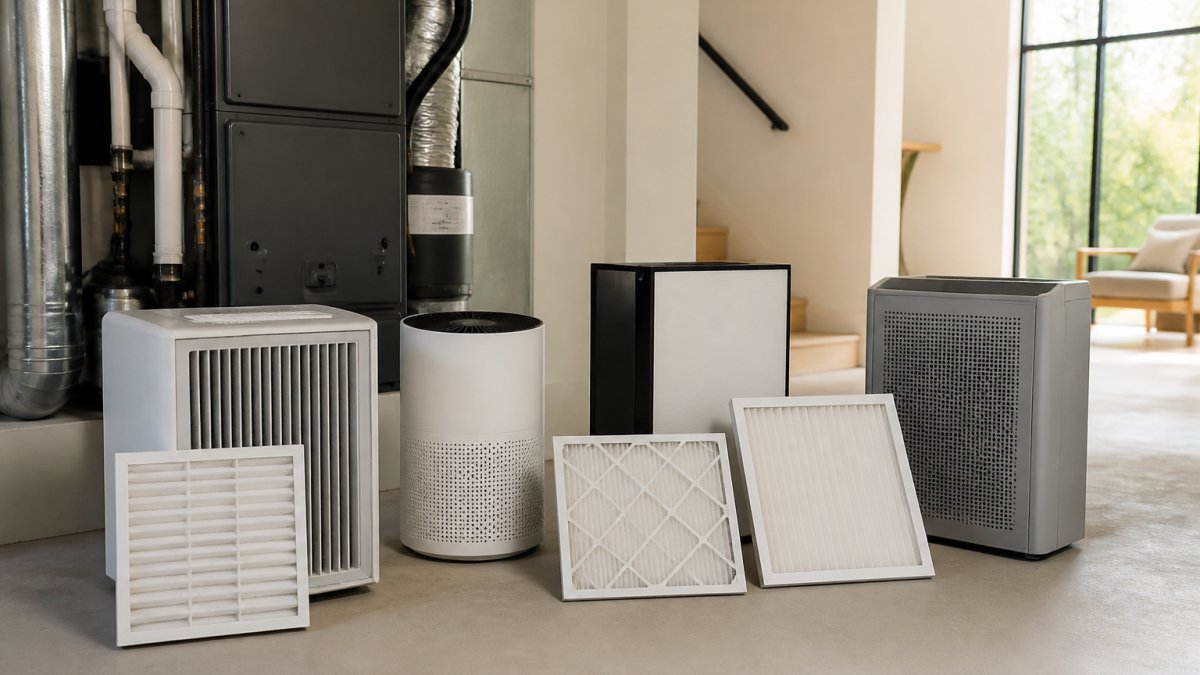
Table of Contents
- Why New Homes Need a Different Air Filtration Strategy
- Quick Comparison: 5 Best Air Filtration Systems for New Homes
- 1. SC Design Mechanical Design and Whole-House Air Purifier Integration
- 2. Coway Airmega Mighty2: Best Portable Air Purifier for New House Bedrooms
- 3. Winix 5530: Strong Filtration Performance and Quiet Operation
- 4. Coway Airmega 400S: HEPA Air Purifier for Large Rooms and Open Floor Plans
- 5. Levoit Vital 200S-P: Best Overall Portable Pick for General Use
- Choosing the Right MERV Rating for Home HVAC in a New Build
- Frequently Asked Questions
Last Updated: October 17, 2026
Why New Homes Need a Different Air Filtration Strategy
A new house is not a clean house. Fresh drywall, curing sealants, and sawdust lodged in ductwork mean a newly built home often has worse indoor air quality than an older one. At SC Design, we specify air filtration systems for new homes before the drywall goes up.
Construction Dust, Off-Gassing, and the First-Year Air Quality Window
Construction dust is a mix of drywall powder, silica, wood fibers, and adhesive residue that settles into every surface and recirculates through the HVAC system for months after move-in. Off-gassing is the release of VOCs from paints, cabinets, flooring, and sealants, and it peaks in the first weeks after installation.
The EPA’s indoor air quality guidance notes that source control and ventilation are the first lines of defense, with filtration as the third. That order matters in a new build: seal the ducts, ventilate during construction, then filter what remains.
Running a new HVAC system without sealing ductwork first pulls construction dust straight into the supply registers. Change filters every few weeks during the first months of occupancy, not every six.
Quick Comparison: 5 Best Air Filtration Systems for New Homes
Here is how the five air filtration systems for new homes compare at a glance.
| System | Type | Best For | Standout Strength |
|---|---|---|---|
| SC Design | Whole-house integration | New builds, ZED and Built Green™ projects | Mechanical design plus filtration in one plan |
| Coway Airmega Mighty2 | Portable | Bedrooms | Onboard sensor, smart features, quiet operation |
| Winix 5530 | Portable | Living areas | Filtration performance, quiet operation |
| Coway Airmega 400S | Portable | Large rooms, open floor plans | Repeat recognition in CNET testing |
| Levoit Vital 200S-P | Portable | General use | Named a best-overall pick for 2026 |
1. SC Design Mechanical Design and Whole-House Air Purifier Integration
Our top pick for a new build is SC Design, because a whole-house air purifier works best when it is designed into the mechanical system from day one.
A whole-house system integrates filtration with the HVAC ductwork, so every room gets filtered air without a portable unit in each corner. We size the filter rack, choose the MERV rating, and plan ventilation alongside it.
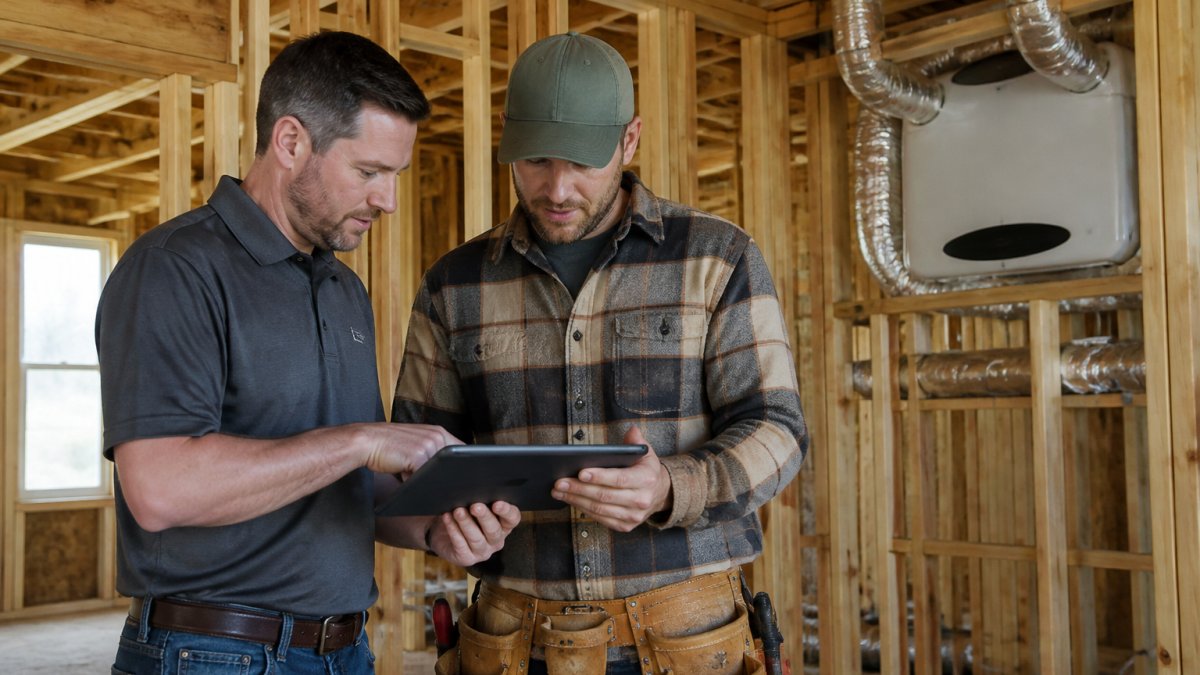
Whole-Home vs. Portable: The Tradeoffs New Homeowners Actually Face
Most buying guides treat portable purifiers as the default and never compare them to a ducted system. For a new build, the comparison is the decision.
Coverage. A portable unit cleans the room it sits in, one bedroom, one living area.
Upfront cost. A portable unit is a single purchase with no installation.
Operating cost. Portables draw power per unit, and several units in several rooms add up.
Installation and timing. A portable needs an outlet and floor space; a whole-home system needs to be designed into the mechanical plan.
Filtration tradeoffs. Whole-home systems typically run MERV-rated media, which captures particles but not gases.
Why Ventilation and Source Control Come First
Filtration does not replace fresh-air ventilation or removing pollutant sources. The EPA’s indoor air quality guidance puts source control and ventilation ahead of filtration, and that order matters in a new build: seal the ducts, ventilate during and after construction, then filter what remains. A whole-home system designed alongside a ventilation strategy, rather than bolted on after, is the version that actually performs.
Pros and Cons
Pros:
- Filtration designed into the mechanical plan, not retrofitted
- Expertise in Zero Energy Design and Built Green™ principles
- Experience across custom homes and large developments since 1976
- Covers the whole home through existing ductwork, including open floor plans
Cons:
- Requires engagement at the design stage, not after move-in
- Pricing depends on project scope, so you need a quote
- Media filters capture particles, not gases; gas-phase concerns need a carbon stage or source control
Architects, builders, and developers planning a new home who want filtration, ventilation, and energy performance designed together, and homeowners comparing whole-home versus portable systems before construction.
2. Coway Airmega Mighty2: Best Portable Air Purifier for New House Bedrooms
For a single bedroom, the Coway Airmega Mighty2 is the portable pick. HouseFresh describes it as a compact purifier with an onboard sensor and smart features, and it runs quietly enough for a nightstand.
The onboard sensor matters in a new home. It lets the unit ramp up automatically when dust or VOCs spike, which happens often in the first months. Where it falls short: the supplied results do not list specifications, warranty, or current pricing, so confirm those before buying.
3. Winix 5530: Strong Filtration Performance and Quiet Operation
RTINGS identifies the Winix 5530 as its best-tested option for most people, citing strong filtration, quiet operation, and useful features. If filtration performance is your priority, this is the model to shortlist.
What most guides miss: a portable unit only cleans the room it sits in. In an open-plan new build, one unit in the living room will not reach the bedrooms down the hall.
4. Coway Airmega 400S: HEPA Air Purifier for Large Rooms and Open Floor Plans
The Coway Airmega 400S is a HEPA air purifier for large rooms, and CNET calls it the only repeat winner on its 2026 list. For open floor plans, a large-room unit beats several small ones.
HEPA filtration captures fine particles, but it does not remove VOCs. Pair a HEPA unit with activated carbon for gas-phase filtration if off-gassing is a concern.
5. Levoit Vital 200S-P: Best Overall Portable Pick for General Use
Dadfficient named the Levoit Vital 200S-P its best overall air purifier for 2026. For general use in a new house, it is a sensible starting point while you plan a permanent solution.
Think of portables as a bridge. They handle bedrooms and living areas now; a whole-house system handles the whole home long term.
Choosing the Right MERV Rating for Home HVAC in a New Build
The right MERV rating for home HVAC in a new build balances particle removal against airflow, and the tradeoff is mechanical, not marketing. A MERV 8 filter handles most dust, pollen, and lint. MERV 11 to 13 adds fine-particle capture, including much of the construction dust and smoke-sized particulate that lingers in a new home, but a denser filter media raises static pressure across the filter rack. If the blower was not sized for that pressure drop, airflow falls, the system runs longer, and the coil can ice in cooling season.
What the MERV Scale Actually Buys You
MERV is a particle-capture rating, not a gas-phase rating. It tells you how well the filter traps particles in a given size range; it says nothing about VOCs, formaldehyde, or odors from new finishes. That distinction matters in a new build, where off-gassing is a gas-phase problem that a higher-MERV pleated filter will not solve. For gas-phase concerns, the answer is activated carbon or another gas-phase medium, either a carbon filter in a whole-home rack or a portable unit with a carbon stage, not a jump from MERV 11 to MERV 16.
A practical ladder for a new home:
- MERV 8, baseline for most residential systems; protects equipment and captures larger dust and pollen without stressing airflow.
- MERV 11, a common step up for new builds where fine dust and smoke are concerns; usually workable if the filter rack is sized generously.
- MERV 13, fine-particle capture approaching HEPA territory for larger particles; requires a system designed for the pressure drop and is often best paired with a media cabinet rather than a 1-inch slot.
- MERV 16 and HEPA-grade media, high capture, high pressure drop; typically needs a dedicated bypass or media cabinet and a blower sized for it. Not a drop-in swap.
Sizing the Filter Rack, Not Just the Filter
The filter’s face area determines how much air it can pass at a given pressure drop. A 1-inch filter in a small return grille loads quickly and chokes airflow; a 4- to 5-inch media cabinet with more pleated surface area holds more dust between changes and keeps pressure drop lower for longer. That is why we size the filter rack to match the MERV rating rather than dropping a high-MERV filter into an undersized slot. We check the ASHRAE standard for HVAC filtration before specifying, and we confirm the blower can handle the resulting static pressure.
Higher MERV is not automatically better. An undersized system with a restrictive filter strains the blower, cuts airflow, and can void equipment warranties. Match the filter to the rack and the blower, not to the number on the box.
Long-Term Ownership Costs
Filter cost is a recurring line item, not a one-time purchase. A 1-inch pleated filter may need changing every one to three months; a 4- to 5-inch media cabinet filter often lasts six to twelve months. During the first months of occupancy in a new home, when construction dust is still settling, expect to change filters more often than the steady-state interval, then settle into a routine. Energy use rises when a restrictive filter forces the blower to work harder, so the cheapest filter upfront is rarely the cheapest over several years.
Ask your builder to seal duct joints and return plenums during construction. Sealed ducts keep construction dust out of the system so the filter is not fighting debris from day one, and they let a higher-MERV filter do its job instead of loading up in weeks.
Frequently Asked Questions
What is the best air filtration system for a house?
There is no single best system for every home. A whole-house air purifier integrated into the HVAC system, such as the mechanical design approach SC Design provides, handles construction dust and VOCs across the entire home. Portable HEPA units like the Coway Airmega Mighty2 or Winix 5530 work well for targeted rooms. Many new-home owners combine both: whole-home filtration for baseline coverage and a portable unit for bedrooms or home offices where they spend the most time.
Is a whole-house air purifier better than a portable air purifier?
A whole-house air purifier treats air across every room connected to the HVAC system, which matters in a new home where off-gassing and construction dust spread everywhere. Portable units move room to room and cost less upfront. Whole-home systems typically cost more to install but deliver consistent filtration without occupying floor space. For large open floor plans, whole-home filtration is usually the more practical choice; for smaller homes or rentals, a portable HEPA unit covers the essentials.
What MERV rating should I choose for a new home’s HVAC system?
MERV 8 to MERV 13 is the practical range for most residential HVAC systems. MERV 13 captures fine particles and some viruses but can restrict airflow in older equipment, so check your system’s static pressure limits before upgrading. A mechanical design consultant can confirm what your blower and ductwork handle. Higher MERV ratings are not automatically better; the right MERV rating for home HVAC depends on equipment capacity, filter depth, and how often you replace the filter.
Do new homes need an air purifier?
New homes often have worse indoor air quality than older ones in the first year. Construction dust, adhesives, paints, and new furniture release fine particles and VOCs that take months to settle. A new house benefits from filtration from day one, whether that is a whole-home system or a portable HEPA air purifier for new house bedrooms. Pairing filtration with fresh-air ventilation and source control gives the strongest results during that first-year window.
How do I size an air purifier for a room?
Match the purifier’s clean air delivery rate (CADR) to the room’s square footage. As a rule, choose a CADR rating at least two-thirds of the room’s floor area in square feet. A 300-square-foot bedroom needs a CADR around 200 for smoke and dust. For large rooms, check the manufacturer’s stated room coverage and confirm it reflects real air changes per hour, not ideal lab conditions. A HEPA air purifier for large rooms should also list noise level at high speed.
A new home deserves an air strategy, not a collection of portable units. If you are planning a build, SC Design can integrate a whole-house air purifier, ventilation, and MERV-rated filtration into your mechanical design from the start. Our team brings Zero Energy Design expertise, Built Green™ principles, and decades of experience across custom homes and large developments. Contact SC Design to plan filtration before the first duct goes in.