
Last Updated: October 27, 2026
Quick Summary
A net zero home produces as much energy as it consumes over a year. It achieves this by combining a high-performance envelope, efficient mechanical systems and on-site renewable generation. Net zero is an annual energy balance, not an off-grid design, so most net zero homes stay connected to the utility.
- Reduce demand first with air sealing, thick insulation and high-performance windows.
- Most net zero homes stay grid-connected, exporting surplus solar and drawing power at night.
- Blower-door testing and commissioning confirm the home performs as modeled.
- Payback depends on local utility rates, net metering rules and available incentives.
- Post-occupancy monitoring over the first year shows whether annual net zero is actually reached.
Table of Contents
- What a Net Zero Home Is and How It Works
- Lower Utility Bills and Energy Efficiency Gains
- Indoor Air Quality, Comfort, and Durability Benefits
- Environmental Impact and Resource Preservation
- Net Zero Home Features That Make the Difference
- Net Zero Home Construction Cost and Payback Period
- Net Zero Home vs. Passive House: Choosing the Right Standard
- Planning Your Next Net Zero Project With SC Design
- Frequently Asked Questions
What a Net Zero Home Is and How It Works
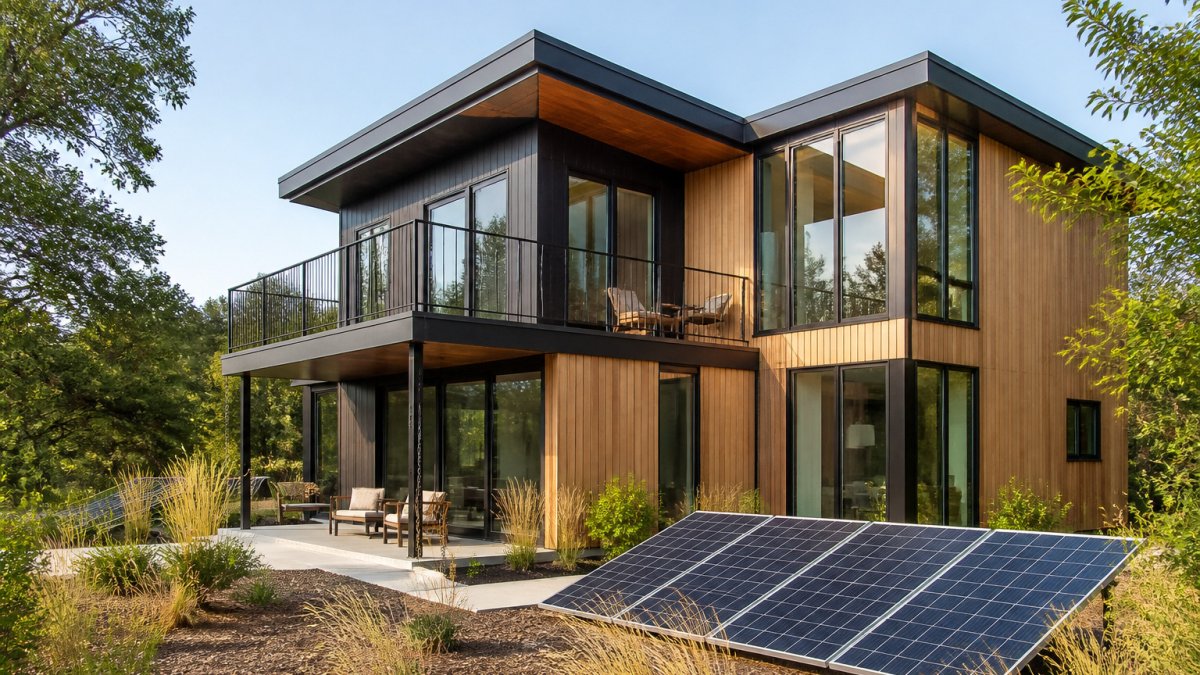
A net zero home produces as much energy as it consumes over a year, typically through a combination of high-performance envelope design, efficient mechanical systems and on-site renewable generation. Zero Energy Design explains the concept in plain language, including what it means in practice. NREL definitions and resources on zero energy buildings Zero energy design is the practice of planning a building’s shell, systems and generation together so the annual energy balance reaches zero.
The approach starts with reducing demand. Tight air sealing, thick insulation and high-performance windows cut the heating and cooling load before any equipment is sized. A heat pump serving that smaller load can then run on far less electricity, and rooftop solar supplies what remains.
Net zero is not the same as off-grid. Most net zero homes stay connected to the utility, exporting surplus generation during sunny hours and drawing from the grid at night. The annual balance is what counts.
Lower Utility Bills and Energy Efficiency Gains
The clearest financial benefit is a smaller utility bill. A home that generates its own electricity can reduce its reliance on purchased energy, and an efficient envelope can reduce energy use.
The trade-off is that savings depend on the system’s design and the local utility’s rate structure. Net metering policies vary by state, and some utilities credit exported power at lower rates than the retail price. A net zero home’s payback depends in part on local utility rates.
Efficiency gains can reduce energy demand.
Indoor Air Quality, Comfort, and Durability Benefits
Airtight construction paired with controlled ventilation can help homeowners manage indoor air.
Comfort improves too. Insulated envelopes keep interior surfaces closer to room temperature, reducing cold spots and drafts.
Durability is a benefit that is easy to overlook. Careful moisture control and continuous insulation can help protect framing from condensation damage. The pros are real, but the limits matter: airtight homes need properly designed ventilation, or moisture and indoor pollutants can build up instead of clearing out.
Environmental Impact and Resource Preservation
Net zero homes cut greenhouse gas emissions by reducing fossil fuel use for heating and electricity. Because the building produces its own clean energy over the year, its operational footprint can approach zero.
Resource use extends beyond energy. Efficient fixtures and water-conscious design reduce consumption, and durable, well-protected assemblies help a home last longer, which postpones the environmental cost of rebuilding. U.S. Department of Energy overview of building energy efficiency
A fuller picture also considers embodied carbon, the emissions from manufacturing and transporting materials. Net zero focuses on operating energy, so material choices deserve separate attention if the goal is lower lifetime impact.
Net Zero Home Features That Make the Difference
Net zero homes can combine energy-efficient design with renewable energy generation.
- Energy modeling before design freeze. Whole-building simulation estimates annual consumption and generation so the envelope, mechanicals, and array are sized as one system. Modeling early lets the design reduce loads first, then size generation to match, the sequence that keeps costs down.
- Blower-door testing and commissioning. A blower-door test measures actual air leakage against the design target; commissioning confirms the heat pump, ventilation, and controls deliver the intended airflow and balance. A small air leak or an undersized system can erase much of the modeled benefit, which is why testing matters more than the spec sheet.
- Post-occupancy monitoring. Utility data and system monitoring over the first year reveal whether the home actually reaches annual net zero. Modeled net zero and measured net zero are different claims; only monitoring closes the gap.
Climate and site affect net zero design. Lot orientation, roof area, local weather, and utility rules can influence energy generation and the value of exported power.
Net zero projects involve design decisions that depend on the project. A practical guide to zero energy design for small builders walks through how to plan for zero energy from the start.
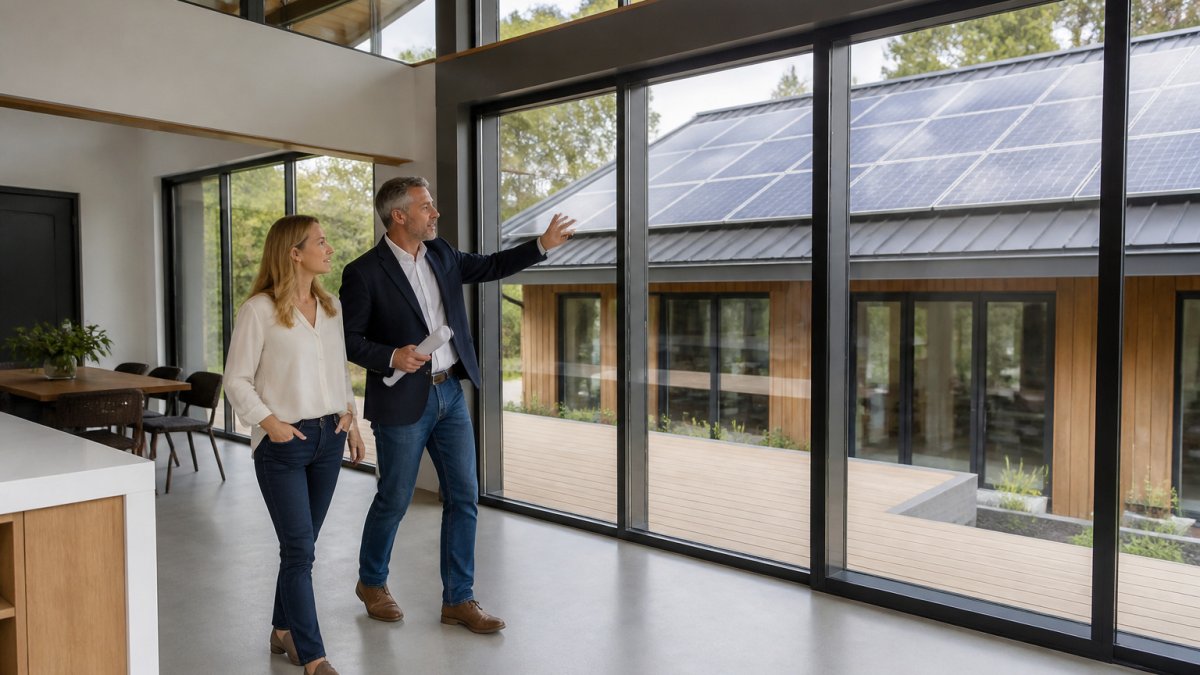
Builder incentives and tax credits can offset some of the added cost. One NYSERDA case study describes a net zero housing project in New York’s Capital Region that earned up to $4,000 in builder incentives per dwelling unit and was eligible for a $2,000 tax credit per dwelling. NYSERDA NetZero Village case study Programs and amounts change, so check current eligibility before budgeting.
A net zero home is a system, not a checklist.
Three practices help a net zero home actually reach its energy target, as summarised below. See how energy modeling evaluates these features to understand how each one is tested in the design process.
| Practice | What it does | Why it matters |
|---|---|---|
| Energy modeling before design freeze | Estimates annual consumption and generation | Sizes envelope, systems and array together |
| Blower-door testing and commissioning | Measures air leakage and confirms system airflow | A small leak or undersized system erases modeled benefit |
| Post-occupancy monitoring | Tracks utility data over the first year | Confirms whether the home reaches annual net zero |
Net Zero Home Construction Cost and Payback Period
Net zero construction costs depend on the project.
Because labor, climate, utility rates, and local code all affect project costs, any figure you see online should be treated as a starting point, not a bid. Sustainable building consulting costs break down what consulting typically runs before you commit.
Payback period is the time it takes energy-bill savings to recover an added investment. The calculation depends on assumptions:
- Annual energy savings = (modeled baseline consumption − modeled net consumption) × local utility rate. A home that cuts load before adding generation saves more per installed solar watt.
- Incentives reduce the effective upfront cost. Federal tax credits, state and utility rebates, and builder incentives all change the numerator. One NYSERDA case study describes a net zero housing project in New York’s Capital Region that earned up to $4,000 in builder incentives per dwelling unit and was eligible for a $2,000 tax credit per dwelling. NYSERDA NetZero Village case study Programs and amounts change, so verify current eligibility before budgeting.
- Utility rate structure sets the value of every kilowatt-hour saved and exported. Under retail-rate net metering, exported solar is credited near the full retail price; under lower export credits or time-of-use rates, the same array is worth less. A net zero home in a high-rate market will show faster payback than one in a low-rate market.
- Financing matters as much as the sticker price. A 30-year mortgage that rolls the efficiency and solar premium into the loan can produce a monthly payment increase smaller than the monthly utility savings, the classic cash-flow-positive case, but that depends on rates and the size of the premium.
A sensitivity check can compare payback under different utility-rate assumptions. Visit the SC Design website to request a quote.
Payback figures quoted without stated assumptions, utility rate, incentive level, export credit, and financing, are not comparable across projects. Ask for the assumptions, not just the number.
Net Zero Home vs. Passive House: Choosing the Right Standard
Passive House and net zero are often confused, but they answer different questions. Passive House is a performance standard focused on very low heating and cooling demand through a rigorous envelope and ventilation approach. Net zero is an annual energy balance that can be met with many combinations of efficiency and generation.
Each has strengths. Passive House focuses on energy demand, while net zero targets the overall energy balance. Many projects combine both, and the trend toward convergence is documented in the industry. Phius ZERO framework for combined Passive House and net zero design The right choice depends on climate, budget and goals.
Planning Your Next Net Zero Project With SC Design
Our firm has served the design community since 1976 and holds a Best of Houzz award for customer service.
If you are planning a net zero home or development, contact SC Design. Preparing for an energy efficiency design quote lists what to gather before you request one.
Frequently Asked Questions
What are the benefits of building a net zero home?
A net zero home is designed to produce as much energy as it consumes over a year. Potential benefits include reduced reliance on purchased energy, improved indoor air quality, and reduced environmental impact. Results depend on climate, site, and design choices.
Does building a net zero home cost more?
Project costs depend on the home and its design. Contact SC Design to request a quote. Potential incentives and operating-cost savings depend on the project and applicable programs.
How long does it take for a net zero home to pay for itself?
Payback time depends on project costs, applicable incentives, local utility rates, and energy production. Because projects differ, any estimate depends on its assumptions.
Can an existing home be upgraded to net zero?
Whether an existing home can be upgraded toward net zero depends on its condition, site, and design. Contact SC Design to discuss your project.
